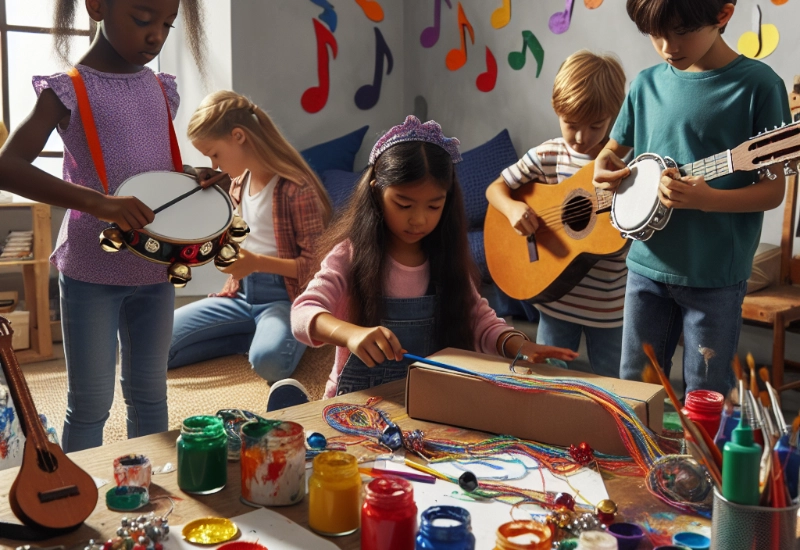
Quick answer: A child is usually ready for drums once they can keep a steady beat, follow simple instructions and sit at a kit with their feet on the pedals; height matters more than age. Start with hand drums or a practice pad, choose a junior or full-size kit by size, pick acoustic or electronic drums based on your home, and protect their hearing from day one.
Sooner or later, a lot of kids discover that hitting things in time is incredibly satisfying. Pots, pans, tables, the back of the sofa: if your child is drumming on everything in sight, they may be asking for a drum kit without saying it out loud.
Drums are a fantastic instrument for kids. They build rhythm, coordination and focus, and they're one of the most physical and expressive instruments there is. They're also loud, take up space and come in a confusing range of options. Here's how I'd approach it as a parent.
Is Your Child Ready for Drums?
There's no single right age, but a few signs suggest your child is ready for more than a toy drum:
- They keep a steady beat. Can they clap or tap along to a song without speeding up or drifting off? That's the most important drumming skill of all.
- They can follow simple instructions for a few minutes at a time, which matters as soon as lessons start.
- They're big enough for the kit. To play a drum kit properly, a child needs to sit with their feet on the pedals and reach the drums and cymbals comfortably. This depends far more on height than on age.
- The interest lasts. A passing wish is different from a child who's been asking for months and drumming on everything in the meantime.
Younger kids can start with hand drums and percussion long before they're ready for a full kit. There's no need to wait to make rhythm part of their life.
Start Small: Hand Drums and a Practice Pad
If you're not sure how serious the interest is, you don't have to start with a whole kit. Two inexpensive options are a great test:
- Hand drums, like bongos, a djembe or a cajón. They're perfect for younger kids and teach rhythm and coordination without sticks. A few of these appear in my list of easy-to-play instruments.
- A practice pad and a pair of sticks. A practice pad is a small rubber pad that's quiet and cheap, and it's where most drummers learn their stick technique anyway. If your child happily practices on a pad for a few months, that's a very good sign.
Junior Kit or Full-Size Kit?
Junior drum kits are scaled-down versions of a full kit, with smaller drums, lower cymbal stands and a smaller stool. For young children, they make it possible to sit properly, reach everything and actually enjoy playing.
The downside is that kids outgrow them. Once your child's feet reach the pedals of a full-size kit comfortably and they can reach the cymbals without stretching, it's time to move up. A full-size kit with adjustable stands and stool can grow with them for many years.
My advice: let your child's size decide, not their age. If you can, visit a music store and let them sit at both. You'll see straight away which one fits.
Acoustic or Electronic Drums?
This is the big decision for most families, and the answer often comes down to where you live.
| Acoustic drums | Electronic drums | |
|---|---|---|
| Volume | Loud with no volume knob; mesh heads and low-volume cymbals help a lot | Turn the module down or use headphones, but pads still thud and the bass pedal can vibrate through the floor |
| Sound and feel | Big, natural sound and a feel that's hard to copy | Feel varies a lot; mesh pads feel much more like real drums than hard rubber |
| Space | Takes more room | Usually takes up less space |
| Extras | None needed beyond the kit | Often built-in metronome, play-along songs and lessons |
| Best for | Homes where noise isn't a problem | Close neighbors, napping siblings and daily quiet practice |
Acoustic Drums
Acoustic drums are the real thing. They have a big, natural sound and a feel that's hard to copy, and many teachers love them for exactly that reason. But they are loud. There's no volume knob, and in a house with close neighbors or a baby who naps, that can be a deal-breaker. Mesh heads and low-volume cymbals can bring the volume down a lot if you go this route.
Electronic Drums
Electronic kits have pads instead of drums, and the sound comes from a module you can turn down or play through headphones. They usually take up less space, and many come with built-in metronomes, play-along songs and lessons, which kids tend to love.
Two things to know. First, they're quieter, not silent: hitting the pads still makes a thudding noise, and the bass drum pedal can send vibrations through the floor to the room below. Second, the feel varies a lot. Mesh pads feel much more like real drums than hard rubber ones, and they're worth paying a bit extra for.
As a pianist, I see a lot of parallels with the piano vs keyboard question: the acoustic version is the gold standard, but a good electronic one is often what makes daily practice possible at all. And daily practice is what matters most.
Protect Their Hearing
This is the part I'd urge every parent not to skip. Up close, an acoustic drum kit can easily go well past 100 decibels, which is loud enough to damage hearing over time. Children's ears deserve the same protection as an adult's.
- Get earplugs or earmuffs made for kids and make them part of the routine, just like a bike helmet. Musicians' earplugs lower the volume evenly, so the music still sounds clear.
- With electronic drums and headphones, keep the volume moderate. It's tempting to crank it up.
- Remind your child that ringing ears after playing are a warning sign, not a badge of honor.
A First Beat to Try
Almost every drummer starts with the same basic rock beat. Count steadily: "1 and 2 and 3 and 4 and".
- Hi-hat (right hand): play on every count, so eight even hits: 1, and, 2, and, 3, and, 4, and.
- Bass drum (right foot): play on 1 and 3.
- Snare drum (left hand): play on 2 and 4.
Start with the hi-hat alone, then add the bass drum, and only then the snare. Go slowly, ideally with a metronome. When all three click together, your child will be playing the beat behind countless songs, and the look on their face will be worth all the noise.
Counting beats and dividing them into "ands" is also a lovely bit of hidden math, something I explore more in developing math skills through music.
Lessons and Practice
Drums look easy, which is exactly why lessons matter. A good teacher sets up the right grip, posture and stick technique from the start, and those habits make a huge difference later, both for speed and for avoiding sore wrists.
At home, short and regular practice beats long and occasional sessions. Fifteen or twenty minutes a day is a great start for a young drummer. Mix technical work on the practice pad with playing along to favorite songs, which is the part kids look forward to most.
One more tip: as soon as your child can hold a steady beat, find chances for them to play with others. Drummers are the heartbeat of any band, and nothing motivates a young drummer like keeping a group together. Even a family jam with a keyboard and a tambourine counts. As a boogie-woogie fan, I'll admit I think of the drummer and the pianist's left hand as best friends: both are there to keep the groove rolling.
Conclusion
If your child is drumming on everything, take it as a good sign. Start with hand drums or a practice pad, choose a kit that fits their size, and pick acoustic or electronic based on your home and your neighbors. Above all, protect their hearing from day one.
With a steady beat, a few good lessons and regular practice, drums can become one of the most joyful instruments your child ever plays. If you're still weighing up options, my guide to the best musical instruments for children compares the drums with other first instruments.
Frequently Asked Questions
What age can a child start drum lessons?
There's no single right age. A child is ready for kit lessons when they can keep a steady beat, follow simple instructions for a few minutes, and sit with their feet on the pedals while reaching the drums and cymbals. That depends more on height than age. Younger kids can start with hand drums and percussion.
Are electronic drums quiet enough for an apartment?
They're much quieter than acoustic drums, but not silent. You can play through headphones, yet hitting the pads still makes a thudding noise, and the bass drum pedal can send vibrations through the floor to the room below. Mesh pads are worth paying a bit extra for, because they feel much more like real drums.
Do kids need ear protection for drums?
Yes. Up close, an acoustic drum kit can easily go well past 100 decibels, which is loud enough to damage hearing over time. Get earplugs or earmuffs made for kids and make them part of the routine. Musicians' earplugs lower the volume evenly, so the music still sounds clear. With electronic drums, keep headphone volume moderate.
How long should a child practice drums each day?
Fifteen or twenty minutes a day is a great start for a young drummer. Short, regular practice beats long, occasional sessions. Mix technical work on the practice pad with playing along to favorite songs, which is the part kids look forward to most. A metronome helps keep the beat steady.